Why So Many Kids Are Getting Cavities (And How to Stop It)
If you've noticed that more children in your community seem to have dental problems, you're not imagining it. Tooth decay is the most common chronic childhood disease in America — more common than asthma or diabetes. Families in Raymond, Epping, Deerfield, Candia, Nottingham, and throughout Rockingham County are experiencing this trend, and many are searching for answers: why is this happening, and what can actually be done?
At Lamprey Dental, we work with children and families every day, and we've seen firsthand how preventable most childhood cavities really are. The challenge is that the causes aren't always what parents expect — and the solutions are simpler than many families realize. Let's break it down.
Sugar: More Pervasive Than Parents Realize
The connection between sugar and cavities is well known — but the extent to which sugar hides in everyday children's foods and drinks is not. It's not just candy bars and soda. Juice boxes, sports drinks, flavored yogurts, granola bars, fruit pouches, and even "natural" crackers all contain sugars that feed the bacteria responsible for tooth decay. Even milk, while nutritious, contains natural sugars (lactose) that can contribute to decay when teeth are exposed to it for long periods.
Each time a child consumes sugar, bacteria produce acid that attacks tooth enamel for up to 20 minutes afterward. The key variable isn't just total sugar intake — it's how often the attacks happen throughout the day. A child who grazes on snacks and drinks juice continuously from morning to evening is subjecting their teeth to acid almost constantly, with no recovery time in between.
The most impactful dietary change families can make is drinking water between meals and saving sugary foods or drinks for mealtimes only. In Raymond and surrounding towns, families have access to municipal water — and using that water rather than juice or flavored drinks throughout the day is one of the simplest and most effective things you can do for your child's dental health.

Brushing: Who's Actually Doing It?
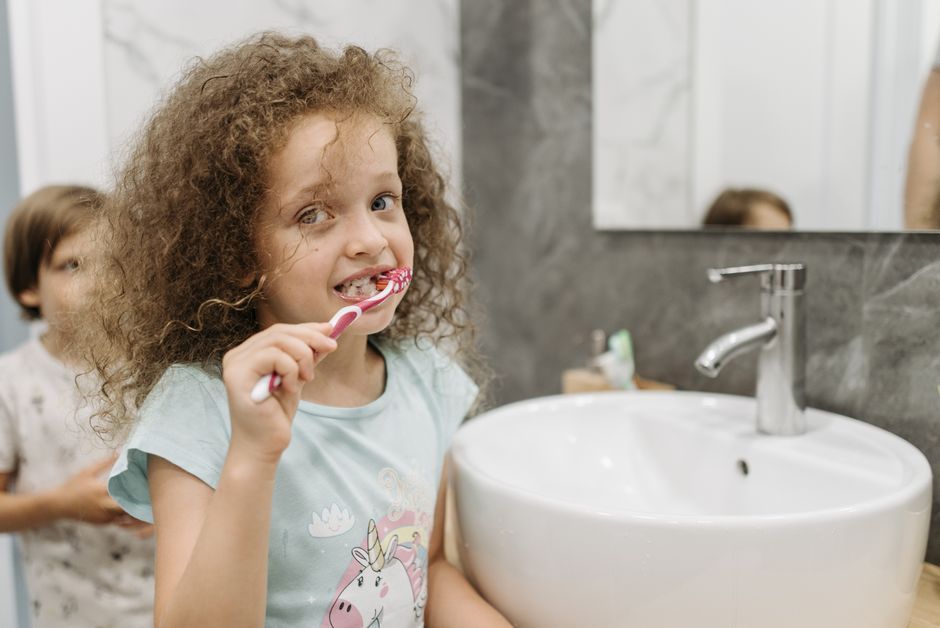
Most families know children should brush twice a day. The issue isn't awareness — it's execution. Children under 7 or 8 years old don't have the fine motor coordination to brush their teeth effectively on their own. They tend to focus on the teeth they can see, rush through the process, and miss the back molars and gumline entirely — the areas that are most vulnerable to cavities.
Dentists recommend that parents take an active role in brushing until around age 7 or 8. This doesn't mean eliminating children's independence — letting them brush first is great for habit formation. But following up to ensure all surfaces are properly cleaned is essential. Think of it the same way you'd verify a child buckled their seatbelt: trust but verify.
Fluoride toothpaste is also critical. For children under 3, use a smear the size of a grain of rice. For children 3 to 6, a pea-sized amount. Fluoride actively strengthens tooth enamel and can reverse very early-stage decay before it becomes a cavity. Ensure children spit, not swallow, after brushing — and if you're not using fluoride toothpaste with your child yet, this is one of the easiest changes to make today.
Why Baby Teeth Deserve More Attention Than They Get
Many parents have heard — or assumed — that cavities in baby teeth aren't a serious concern because those teeth will fall out anyway. This belief, while understandable, is one of the most consequential misconceptions in pediatric dental care. Baby teeth matter enormously, and untreated decay in them can cause problems that persist long into adulthood.
Baby teeth hold space for permanent teeth. When a baby tooth is lost too early due to decay, surrounding teeth shift and crowd into the gap. The permanent tooth that should have filled that space can come in crooked, impacted, or in the wrong position — often requiring years of orthodontic treatment. Baby teeth also help children chew food properly, develop speech, and feel confident smiling around peers and in school settings.
Additionally, a cavity in a baby tooth doesn't stay contained. Infection can spread from the tooth root to the underlying permanent tooth still developing in the jawbone below. Protecting baby teeth isn't just about now — it's an investment in the permanent smile that's forming underneath.
Sippy Cups and Bedtime Bottles: A Common Culprit in Young Children
For infants and toddlers, two very specific habits are responsible for a large portion of early childhood cavities: all-day use of sippy cups filled with milk or juice, and falling asleep with a bottle. When teeth are in continuous contact with sugary liquids for hours — during a long afternoon of sipping or overnight while a child sleeps — bacteria have a constant fuel source and can cause decay very rapidly.
Dentists call the resulting condition "baby bottle tooth decay." It often starts as white or brown spots on the upper front teeth and can progress to severe cavities across multiple teeth within just months. Treatment for advanced cases in toddlers frequently requires sedation — far more traumatic and expensive than prevention. The fix: use sippy cups for water only between meals, serve milk at mealtimes, and if a bottle is needed at bedtime, fill it with water only.

Sealants and Fluoride Varnish: Proven Prevention at the Office
At Lamprey Dental, two of our most effective tools for reducing childhood cavities are dental sealants and professional fluoride varnish. Dental sealants are thin, clear plastic coatings bonded to the chewing surfaces of the back molars. Because these teeth have deep grooves that are nearly impossible to clean completely with a toothbrush, they account for the majority of cavities in school-age children. Sealants fill those grooves and provide a smooth, protective barrier — reducing cavity risk by up to 80 percent in those teeth.
Professional fluoride varnish, applied in minutes during a routine visit, delivers far more fluoride to the enamel than toothpaste alone can provide. For children who have had recent cavities, who have cavity-prone teeth by genetics, or who drink primarily bottled or well water without fluoride, these in-office treatments can significantly strengthen their defenses between appointments. Both treatments are quick, comfortable, and far less expensive than treating cavities after they form.
Starting Early: The First Dental Visit
The American Academy of Pediatric Dentistry recommends that children have their first dental visit by age 1, or within six months of their first tooth coming in. Many parents are surprised by this timeline — but starting early has real benefits. Early visits allow our team to spot any beginning signs of decay, give parents individualized guidance for their child's specific situation, and build the kind of positive dental experience that makes children comfortable for a lifetime of checkups.
Once established, six-month checkups provide the consistent monitoring, fluoride application, and sealant placement that keep small risks from becoming big problems. Children who start routine dental care early consistently have healthier teeth throughout childhood and into adulthood.
Lamprey Dental
Childhood cavities are prevalent throughout New Hampshire — but they're not inevitable. With the right combination of habits at home and preventive care at our office, most children can avoid the pain, cost, and anxiety of significant dental treatment. We're proud to serve families in Raymond, Epping, Candia, Deerfield, Nottingham, Fremont, Chester, and throughout the Rockingham County area.
Ready to schedule your child's next visit or their very first appointment? Contact Lamprey Dental today. Call us at (603) 895-3161 or stop by our office at 37 Epping St, Raymond, NH 03077.